Origin and Natural Habitat
Conophytum chauviniae is native to the Namaqualand region of the Northern Cape, South Africa. It occurs specifically in the area between Garies and Bitterfontein. In its natural habitat, it grows in gritty soil among rocky outcrops or quartz patches. These environments provide excellent drainage and protection from the extreme surface temperatures of the region.
Plant Characteristics
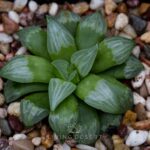
The individual bodies of Conophytum chauviniae are small, usually reaching no more than 15mm in height. Each body consists of a pair of succulent leaves that are fused almost to the top, with a small fissure or slit at the apex. The epidermis is typically a soft grey-green, often marked with darker spots or streaks that become more prominent under high light conditions. This species is nocturnal flowering, producing scented, yellowish to cream-colored blossoms in autumn. During the summer months, the plant enters a dormant state where the old leaf pairs dry out and form a protective papery sheath around the new growth.
Care Guide
Light
Conophytum chauviniae requires bright, filtered light to maintain its compact shape and healthy colouration. While it enjoys direct morning sun, it must be protected from the intense heat of the afternoon sun, especially during the summer dormancy. A greenhouse with 40% shade cloth or a very bright windowsill with filtered light is an ideal location.
Soil
A very gritty, inorganic mineral soil is essential for the survival of this species. We recommend a mixture of pumice and akadama. The medium must be free-draining and should not contain any coco peat or heavy organic matter that could retain moisture around the base of the plant.
Water
Conophytum chauviniae follows a strict seasonal cycle. Begin watering in late autumn when the new bodies begin to break through the old, dry sheaths. Water thoroughly, but infrequently, during the winter months. Allow the soil to dry out between each watering session. Stop watering completely in late spring as the plant begins to go dormant. During the summer, the leaves will shrivel and turn into a paper-like protective sheath. Do not water during this time, as any moisture will cause rot.
Pot size
Because of their small size and shallow root systems, these plants are best suited for small, shallow pots. An 8cm clay or plastic pot is usually more than enough for a cluster. Using a smaller pot also helps prevent the soil from staying wet for too long.
Temperature
This species is well-adapted to the cool, damp winters and hot, dry summers of the Northern Cape. It is happiest in temperatures between 10°C and 25°C during its growing season. It can tolerate light frost if kept bone dry, but it should generally be protected from freezing temperatures.
Humidity
Conophytum chauviniae appreciates good air circulation and moderate humidity, mimicking the coastal fogs of the Richtersveld. However, it is very important to avoid stagnant, humid air, especially during the summer dormancy, as this can encourage fungal growth under the protective sheaths.
Fertilizing
Use a half-strength diluted liquid fertilizer once or twice during the peak growing season. Do not fertilize in summer.
Growing season
The active growing season is from autumn through early spring. This is when the plant flowers and produces its new bodies. Throughout the summer, the plant is strictly dormant.
Propagation
Conophytum chauviniae can be propagated through seed or by division of older clumps.
Division: Cuttings or divisions should be taken in early autumn just as the plant is waking up. Ensure each head has a small portion of the woody stem attached. Let the plant callous for at least two weeks, then place the cutting in a gritty medium until new roots begin to form.
Seed germination: Sow seeds in autumn on the surface of a fine, sandy mineral mix. Keep the tray in a cool, bright spot and mist regularly with a fine spray. Germination usually occurs within one to two weeks. The tiny seedlings should be kept lightly moist. Do not let them dry out.