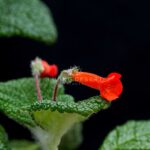
Pachypodium densiflorum
Pachypodium densiflorum forms a highly swollen, irregular succulent caudex that produces multiple short, spine-covered branches. This slow-growing pachycaul tree differentiates itself by holding bright, golden-yellow flowers on long peduncles that rise high above the leaf canopy. The smooth, silver-grey bark reflects intense heat, while short, paired conical spines line the branches to defend the water-rich trunk from grazing animals during extended dry spells.
Origin and Natural Habitat
This species occurs natively across the central highland plateau of Madagascar. The plants inhabit exposed granite outcrops, rocky inselbergs, and sheer stone faces at elevations between 1000 and 1500 meters above sea level. They endure an environment marked by a severe dry season and intense, unfiltered ultraviolet radiation. The thick succulent base anchors firmly into shallow rock crevices, storing large water reserves that allow the plant to survive months of total drought on baking stone surfaces.
Plant Characteristics
The globose caudex of Pachypodium densiflorum can spread horizontally to reach diameters of over 30 cm in mature specimens. It produces a dense cluster of elliptic, dark green leaves with a pale central vein at the terminal tips of the spiny branches. It blooms profusely from late spring through summer, generating trumpet-shaped yellow flowers with a small white eye at the center. The plant produces a clear, watery sap containing toxic cardenolides to discourage boring insects and mammalian herbivores.
Care Guide
Light
This succulent demands maximum light intensity to maintain its compact branch structure and develop a smooth, silver bark. Provide at least six to eight hours of direct daily sunlight throughout the year. Insufficient light forces the branches to elongate thin and green, which ruins the natural bonsai appearance and prevents flowering.
Soil
Pachypodium as a genus requires a very well-draining soil mixture with plenty of gritty components. A medium with akadama and pumice is preferred.
Water
Water the plant thoroughly during the warm spring and summer months only when the substrate dries out completely. Follow the strict soak and dry method while the plant carries green foliage. Reduce watering frequency in autumn as the leaves begin to yellow and drop. Keep the soil bone-dry throughout the winter dormancy phase to protect the root system.
Pot size
Select a shallow, wide terracotta container that comfortably matches the broad base of the caudex. Terracotta allows moisture to evaporate evenly from the sides of the root zone, reducing the danger of water stagnation. Leave a small 3 cm buffer zone around the edge of the swollen trunk to allow for future expansion.
Temperature
This tropical mountain species thrives in hot summer temperatures between 25°C and 35°C. It struggles in cold, damp conditions and suffers severe tip rot if temperatures drop below 10°C for extended periods. Move the pot indoors to a sunny windowsill or place it inside a heated greenhouse before winter cold fronts arrive.
Humidity
Maintain low air humidity levels in the growing area to mirror the dry Madagascar highlands. High humidity combined with stagnant air encourages fungal pathogens to attack the leaves and branch tips. Provide continuous, active air movement around the canopy using fans or open greenhouse windows.
Fertilizing
Apply a low-nitrogen liquid fertilizer diluted to quarter strength once a month during the peak summer growing period. Do not feed the plant during autumn or winter dormancy. Too much nitrogen causes weak, bloated tissue that splits open easily and leaves permanent scars.
Growing Season
Pachypodium densiflorum grows actively from late spring through late summer, utilizing the heat to produce new foliage and bright yellow blossoms. It enters a deep dormancy phase in late autumn, shedding all leaf material to conserve its internal moisture reserves. The plant requires a strict dry winter rest to prevent the core from collapsing.
Propagation
You can propagate this species successfully by sowing fresh seeds.
Seed Sowing: Sow fresh, winged seeds in early summer when daytime temperatures remain consistently high. Place the seeds horizontally on top of a moist mineral potting mix and cover them with a thin 3 mm layer of fine grit. Keep the container warm and under bright light, maintaining light surface moisture until germination occurs within four to ten days. Provide immediate air ventilation after emergence to prevent damping-off fungi.