Tylecodon wallichii subsp. ecklonianus
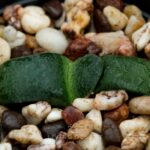
Tylecodon wallichii subsp. ecklonianus is a succulent shrub in the family Crassulaceae. It features a thick, gnarled caudex and yellowish-green stems covered in persistent leaf bases known as phyllopodia. These protrusions give the stems a distinct, tuberculate texture. During the winter growing season, it produces a cluster of long, cylindrical leaves at the branch tips which it sheds before the onset of summer dormancy.
Origin and Natural Habitat
This subspecies occurs in the arid regions of the Western and Northern Cape, South Africa. It thrives in the Nama Karoo and parts of the succulent Karoo, often growing on rocky slopes and within Namaqualand broken veld. The plants frequently grow among boulders which provide structural support and some protection for the succulent root system against the intense sun and heat.
Plant Characteristics
The plant grows as an upright, branched shrub reaching up to 50 cm in height. The stems are fleshy and store significant water reserves. Its leaves are green, succulent, and taper toward the tips. In late spring or early summer, the plant produces an upright inflorescence bearing yellowish-green, tubular flowers. It is important to note that this species contains cardiac glycosides and is toxic to livestock and humans if ingested.
Care Guide
Light
Tylecodon wallichii subsp. ecklonianus requires full sun to bright, indirect light. In a greenhouse environment, provide at least 40% shade cloth to prevent the stems from scorching during peak summer. High light levels are necessary to maintain a compact growth habit and to ensure the stems develop their characteristic thick, yellowish appearance.
Soil
A very porous mineral substrate is essential. Use a mixture of two parts grit or coarse sand to one part sandy loam. The soil must drain rapidly to prevent the caudex and roots from rotting. Avoid any potting media with high peat content or moisture-retaining additives.
Water
This is a winter-growing species. Begin watering in autumn as new leaves emerge from the stem tips. Provide deep waterings but allow the soil to dry out completely between applications. Reduce water in spring as the leaves begin to yellow and drop. During the summer dormancy period, keep the plant almost entirely dry.
Pot size
Select a sturdy terracotta pot that can accommodate the weight of the thick stems. The pot should be deep enough for the root system but not excessively large. A container that allows 3 cm to 5 cm of space around the base of the stem is sufficient. Terracotta is ideal because it allows the root zone to breathe and dry quickly.
Temperature
The plant thrives in temperatures between 12°C and 26°C. It is adapted to cool, dry winters and can tolerate light frost if the soil is dry. During the summer dormancy, ensure the plant remains in a well-ventilated area to survive high temperatures without internal rot.
Humidity
Low humidity is vital for this species. It is highly susceptible to fungal issues if kept in stagnant, humid air. Ensure the growing space has constant airflow, particularly during the winter months when the plant is in active growth.
Fertilizing
Apply a balanced liquid fertilizer diluted to quarter-strength once in early autumn. Supplemental feeding is rarely necessary if the plant is grown in a fresh mineral mix. Avoid nitrogen-heavy fertilizers as they cause weak, elongated growth.
Growing season
Tylecodon wallichii subsp. ecklonianus is a winter grower. It remains dormant through the summer months when it is typically leafless. New growth begins in autumn with the arrival of cooler nights. The plant flowers in early summer as the leaves begin to wither, marking the start of its resting phase.
Propagation
You can propagate this subspecies through seed or by taking stem cuttings.
Seed germination: Sow seeds in autumn in a sandy, well-drained medium. Cover the fine seeds with only a very thin layer of grit. Keep the medium lightly moist and provide bright, filtered light. Seedlings grow slowly and require careful moisture management during their first two years.
Stem cuttings: Take cuttings during the early autumn at the start of the growing season. Use a sharp, sterile blade and allow the cutting to callus for at least two weeks in a cool, dry place. Insert the cutting into a gritty rooting medium and provide very little water until new growth indicates that roots have formed.