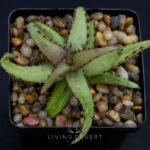
Conophytum tantillum subsp. eenkokerense
Conophytum tantillum subsp. eenkokerense forms tight, clustering bodies with a smooth, bright green epidermis marked by fine, darker lines. It stands out for its remarkably compact growth habit and its vivid, nocturnally opening flowers. The plant maintains a neat, mat-forming shape that resists becoming woody or over-extended.
Origin and Natural Habitat
This subspecies occurs in the arid, rocky landscapes of the Richtersveld in the Northern Cape. The plants thrive in quartz-rich soil where they find shelter from the intense sun. They rely on winter rains for hydration and retreat into their old, dried leaves to survive the scorching summer heat.
Plant Characteristics
The small, succulent bodies grow to about 1 cm in diameter. The surface appears smooth, sometimes showing subtle, translucent markings. It produces small, sweetly scented, bright yellow to orange flowers in late autumn. Once the blooming phase finishes, the old skin dries into a protective shell that covers the new growth during summer dormancy.
Care Guide
Light
Provide bright, filtered light. Intense, direct sun burns the delicate epidermis. A position with morning sun works best, or use 40% shade cloth to keep the growth compact.
Soil
The roots require excellent drainage to prevent rot. For added aeration and drainage, LDP Super Drainage Mix provides the ideal environment.
Water
Water the plant thoroughly during the active autumn and winter growth months. Stop all water completely when the plant begins to form its dry summer sheath. Keep the soil bone-dry during the summer dormancy.
Pot Size
Use small, shallow terracotta pots. Deep containers trap excess moisture at the base and increase the risk of root rot.
Temperature
Keep temperatures between 10°C and 25°C. The plant tolerates cool winter nights well but requires protection from severe frost.
Humidity
Maintain constant, active airflow around the growing area. Stagnant humidity triggers fungal decay in the compact leaf clusters.
Fertilizing
Feed the plant only once or twice during the peak autumn growth cycle with a low-nitrogen, diluted succulent fertilizer. Avoid fertilizer during the summer dormant phase.
Growing Season
Conophytum tantillum subsp. eenkokerense remains active during the cooler months of autumn and winter. It slows its metabolism significantly during the peak heat of summer to conserve moisture. Adjust your watering frequency to match these distinct seasonal growth pulses.
Propagation
You can propagate this species through division or seed sowing.
Division: Carefully lift the cluster from its container during the autumn repotting window. Separate the individual heads using a sterile blade. Ensure each piece retains a healthy portion of the root system. Plant the divisions into a dry mineral substrate and keep them shaded for one week before starting a light watering schedule.
Seed: Sow the fine seeds onto the surface of a sterilized, gritty mix during autumn. Cover the pot with glass or plastic to maintain high humidity and moisture. Remove the cover gradually once germination begins. Keep the seedlings away from direct sun until they establish their first true bodies.