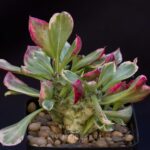
Gibbaeum dispar
Gibbaeum dispar is a clump-forming succulent perennial in the family Aizoaceae. This species produces pairs of unequal, velvety leaves that form a compact, rounded body. The epidermis features a dense covering of fine, grey-green hairs that provide a felt-like texture and protect the plant from intense solar radiation. Its specific epithet, dispar, refers to the characteristic inequality in the size of the two leaves in each pair.
Origin and Natural Habitat
This species is endemic to the Little Karoo in the Western Cape, South Africa, primarily occurring in the Vanwyksdorp area. It thrives in quartz-covered plains and stony slopes. These quartz pebbles reflect heat and light, creating a specialized microclimate. The plant often grows partially submerged in the soil or nestled among stones to minimize exposure to dry winds and extreme temperatures.
Plant Characteristics
The plant consists of thick, succulent leaves that are fused at the base. One leaf in the pair is significantly larger and more rounded than the other, creating an asymmetrical appearance. Mature specimens form dense mats over time. It produces showy, magenta to purple flowers in late winter or early spring. Following the flowering period, the plant enters a summer dormancy where it may slightly shrivel as it conserves moisture.
Care Guide
Light
This species requires very bright, indirect light or several hours of morning sun to maintain its compact habit and velvet texture. In a greenhouse setting, use 40% to 50% shade cloth. Inadequate light levels will cause the leaf pairs to elongate and lose their characteristic rounded shape.
Soil
Use an extremely well-draining mineral substrate. A mixture of akadama and pumice is ideal. Avoid organic-rich soils that retain moisture, as these frequently cause the root system to collapse.
Water
Water the plant during its active growth phase in autumn and winter. Allow the soil to dry out completely between waterings. Reduce moisture as the plant finishes flowering in spring. Keep the plant almost entirely dry throughout the summer dormancy period to mimic its natural environment.
Pot size
Select a shallow pot or pan to accommodate the clumping growth habit. A container with a diameter of 8cm to 10cm provides sufficient space for several years of growth. Ensure the pot has large drainage holes to prevent any water from pooling at the base.
Temperature
Gibbaeum dispar thrives in temperatures between 12°C and 24°C. It tolerates cool winter nights and can survive light frost if the soil remains dry. During summer heat, ensure the plant sits in a well-ventilated, shaded area to prevent thermal stress while dormant.
Humidity
Low humidity is essential for this felted species. High humidity combined with low light or poor ventilation often leads to fungal infections on the epidermis. Maintain constant airflow around the plant at all times.
Fertilizing
Apply a low-nitrogen liquid fertilizer diluted to quarter-strength once in early autumn. Avoid frequent feeding, as excessive nutrients will cause the leaves to split or grow unnaturally large.
Growing season
Gibbaeum dispar is a winter-growing species. It initiates new growth in late autumn and reaches its peak activity during the winter months. The plant typically flowers in late winter and enters a dormant state as the summer heat begins in November.
Propagation
You can propagate this species through seed or by dividing established clumps.
Seed germination: Sow seeds in autumn in a sterile, gritty medium. Cover them with a very thin layer of fine quartz grit. Keep the medium lightly moist and provide bright, filtered light. Seedlings grow slowly and require careful monitoring to prevent damping off during their first season.
Division: Carefully divide large clusters at the start of the autumn growing season. Ensure each division retains a portion of the root system. Place the divisions in a dry, sandy mix and withhold water for a week to allow any damaged tissue to callus before encouraging new root growth.