Origin and Natural Habitat
This plant is a Namibian endemic, and only occurs near the town of Lüderitz in the southern part of the country.
Plant Characteristics
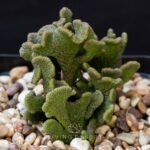
Lithops optica v. rubra is identical to the original species in terms of markings, but has far more impressive colouration. These plants are entirely dark red to purple, with even darker leaf tips. They produce a single white flower per head at the end of summer.
Care Guide
Light
Lithops need bright filtered light, preferably for the majority of the day. We recommend 60% shade cloth. Lithops will not tolerate full sun in cultivation.
Soil
Lithops require a very well-draining soil mixture with plenty of gritty components. A medium with akadama and pumice is preferred.
Water
In cultivation, Lithops optica v. rubra can be watered sparingly during the warmer months. Soak completely through, and allow the soil to dry totally before watering again. However, keep them completely dry in winter when it is dormant. Do not water immediately after flowering. Keep dry whilst it is ‘splitting’ (producing new leaves) until the old set of leaves has completely withered away.
Pot size
Lithops are dwarf succulents and individual stems remain small. This genus does however form large clusters after many years of growth. Initially, a 8-10cm pot will be sufficient. As they grow older, plant this species in a pot that is 5cm wider than its outermost stems to accommodate new growth.
Temperature
Lithops‘ ideal temperature ranges between 15 – 25°C. It can tolerate 5 – 35°C and is highly sensitive to frost.
Humidity
Lithops are extremely sensitive to humidity. Make sure that your growing space has plenty of airflow to prevent stem rot.
Fertilizing
Use a half-strength diluted general liquid fertilizer only during the growing season. Do not fertilize during winter. Alternatively, a small amount of slow-release fertilizer will be sufficient.
Growing season
Lithops optica v. rubra are in active growth during spring and summer.
Propagation
Lithops optica v. rubra are best propagated from seeds.
Seed germination: Seeds should be sown in early autumn. Plant the seeds in a coco peat mix in an airtight container, and cover them with some sifted coco peat. Once most of the seeds have germinated, remove the lid of the container to allow airflow. Gently water the seedlings every few days so that the soil does not dry out. The container should be relatively deep to accommodate their root systems.