Origin and Natural Habitat
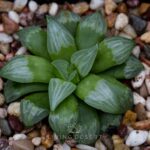
These particular Haworthia arachnoidea are native to the Eastern Cape of South Africa, specifically to the Tretyre locality.
Plant Characteristics
Haworthia arachnoidea are covered in fine ‘cilia’ on their leaves, giving them a ‘spiderweb’-like appearance. Also known as Haworthia arachnoidea ‘tretyrensis’ or Haworthia tretyrensis.
Care Guide
Light
Haworthia arachnoidea prefers shade and will maintain its form well if kept under 60% shade cloth. It will not tolerate full sun.
Soil
This hybrid requires a very well-draining soil mixture with plenty of gritty components. A medium with akadama and pumice is preferred.
Water
In cultivation, Haworthia can be watered well during the cooler months. However, reduce the amount of water it receives in summer when it is dormant.
Pot size
Haworthia arachnoidea are relatively small plants, and a 10-12cm pot will be sufficient.
Temperature
This plants’ ideal temperature ranges between 15 – 25°C. It can tolerate 5 – 35°C and is highly sensitive to frost.
Humidity
Haworthia are sensitive to humidity. Make sure that your growing space has plenty of airflow. Flower stems may become moldy if kept in too high humidity.
Fertilizing
Use a half-strength diluted general liquid fertilizer only during the growing season. Do not fertilize during summer. Alternatively, a small amount of slow-release fertilizer will be sufficient.
Growing season
Haworthia are in active growth during autumn, winter and early spring.
Propagation
Haworthia can be propagated from offsets and seeds.
Seed germination: Seeds should be sown in early autumn. Plant the seeds in a coco peat mix in an airtight container, and cover them with some sifted coco peat. Once most of the seeds have germinated, remove the lid of the container to allow airflow. Gently water the seedlings every few days so that the soil does not dry out. The container should be relatively deep to accommodate their root systems.
Offset propagation: Using a sharp, clean knife, cut an offset of the Haworthia from the main stem. Let this dry for 5 days, then plant it. The best time to propagate is early autumn.